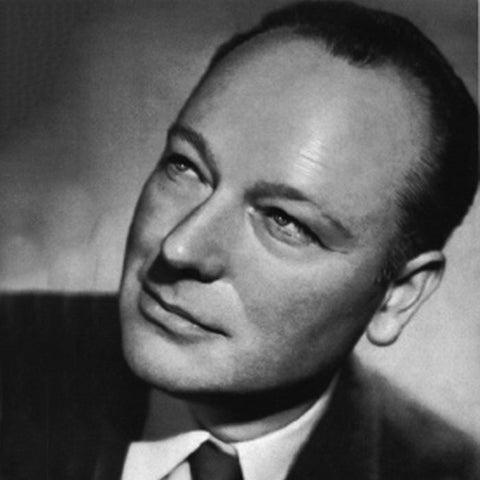
Jacques Adnet, an architect of elegance, a modernist who believed that luxury and innovation could speak the same language. Born in Châtillon Coligny, France, he trained at the École des Arts Décoratifs in Paris, entering a world where the old guard of Art Deco reigned supreme. Yet Adnet’s genius was his ability to refine that language rather than reject it, stripping it of ornament until only proportion, clarity, and material presence remained. His work is at once rational and sensual, functional and poetic.
By the 1920s he was already directing the Compagnie des Arts Français, leading a generation of designers in redefining French taste between the wars. Where his contemporaries often clung to heavy exoticism, Adnet pursued a quieter modernity: lean silhouettes, geometric restraint, and impeccable craftsmanship. He was among the first to embrace materials that embodied progress, glass, chrome, mirror and later became synonymous with saddle-stitched leather, a signature that lent rigor and refinement to everything from desks to mirrors. In his hands, leather ceased to be decorative trim and became structure itself, stitched with the precision of haute couture.
Adnet’s career bridged design and architecture, luxury and industry. He designed interiors for the most discerning clients, from embassies to corporate headquarters, and produced furniture that carried the cachet of French savoir-faire into the modern age.
In 1950, he was appointed director of the École Nationale Supérieure des Arts Décoratifs, shaping the next generation of designers while continuing to create. His collaborations with Hermès brought him even greater renown, reinforcing his reputation as the designer who could marry modern lines with timeless craftsmanship. Today, Adnet’s works are held in the Musée des Arts Décoratifs in Paris, the Centre Pompidou, and major international collections. They are not relics of a vanished taste but enduring models of what French design can be: modern yet luxurious, forward-looking yet rooted in craft.
Jacques Adnet was, above all, a classicist of modernism. His furniture does not shout; it resonates. It embodies a discipline of line, a respect for material, and an elegance so pure it still feels contemporary.