Allen Jones was never simply a Pop artist; he was an architect of tension, shaping a language where desire, image, and object collide. Born in Southampton in 1937, he emerged in London at a moment when painting was shifting from post-war abstraction toward the immediacy of popular imagery. Yet rather than merely adopting this visual language, Jones intensified it, pushing the human figure into a charged territory between seduction and unease.
From the early 1960s, his work gained international recognition, notably at the Paris Biennale in 1963, where he represented the UK and received the Prix des Jeunes Artistes. His paintings and sculptures soon entered major collections, including the Tate, the Victoria & Albert Museum, the Museum of Modern Art in New York, and the Hirshhorn Museum in Washington DC.
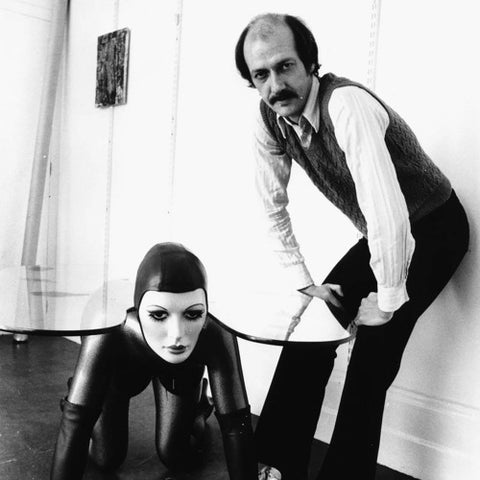
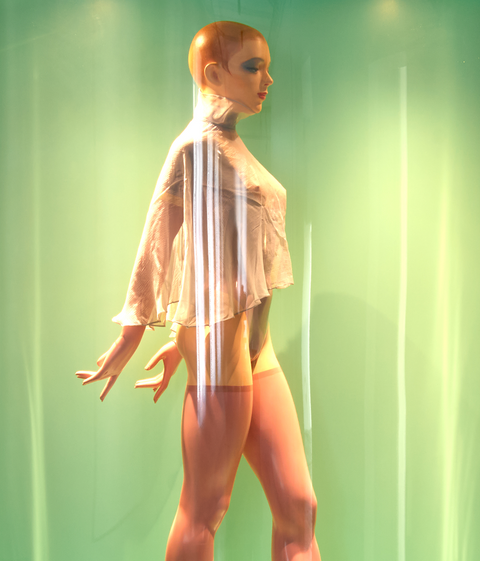
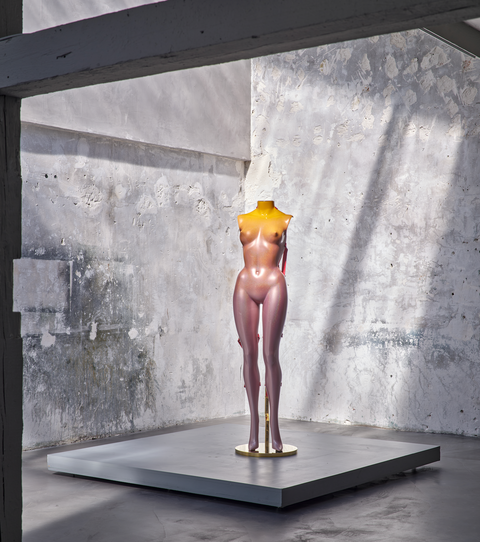
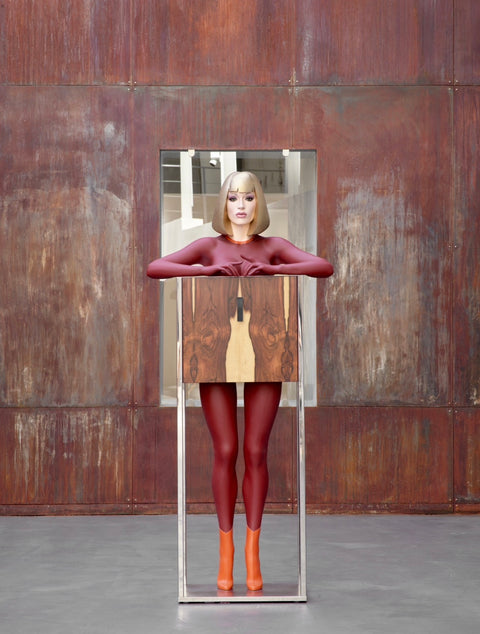
Jones became widely known for works that fuse the codes of advertising, fashion, and erotic imagery with a structural rigor inherited from modernism. His iconic sculptural pieces figures transformed into functional objects, collapse the boundary between body and design, provoking both fascination and controversy. Where Pop often embraced surface, Jones introduced friction: a psychological and spatial tension beneath the gloss.
His career has been marked by major retrospectives, from the Walker Art Gallery and Serpentine Gallery in the late 1970s, to the Barbican in 1995, and later exhibitions at Tate Britain and the Royal Academy in 2007–08. The exhibition Off the Wall, spanning over five decades, further revealed the consistency and evolution of his practice.
Beyond the gallery, Jones extended his work into public and architectural space through large- scale commissions, monumental sculptures installed in London, Hong Kong, and China, as well as mural projects and site-specific works. He also designed for ballet and television, expanding his visual language into performance and movement.
Elected a Royal Academician in 1986 and later a Trustee of the British Museum, Jones occupies a singular position within post-war British art. His work stands at a critical intersection, between abstraction and image culture, object and body, attraction and discomfort, remaining as provocative and precise today as at its inception.