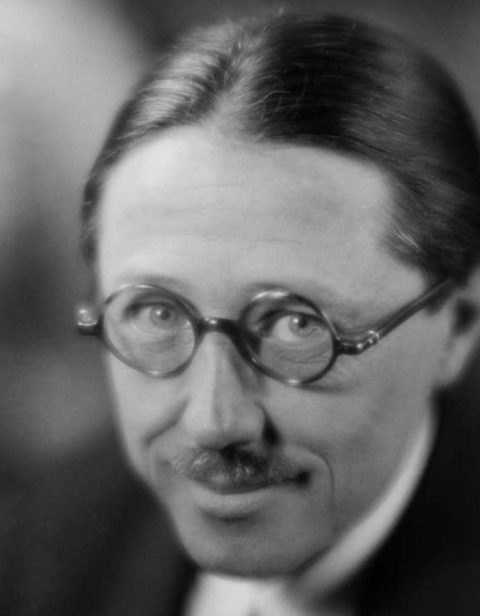
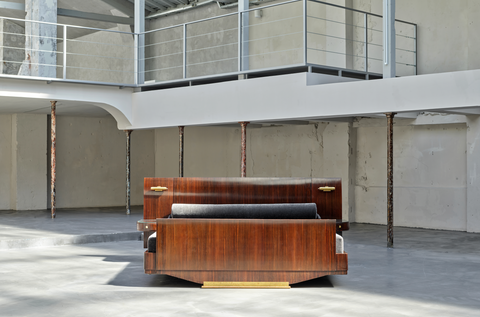
Ruhlmann did not design furniture in the conventional sense; he constructed a vision of living in which every object carried the weight of intention, precision, and quiet authority. His work belongs to a world where nothing is accidental, where proportion, material, and line converge into an idea of absolute harmony.
Born in 1879, he inherited his father’s decorating business, yet rapidly redefined its scope. Moving beyond surface and ornament, Ruhlmann approached interiors as complete compositions, shaping spaces with the same rigor one might apply to architecture. His sensibility was neither nostalgic nor radically avant-garde, but something far more controlled: a pursuit of balance between classical order and modern clarity.
By the 1920s, his position was firmly established, reaching a defining moment at the Exposition Internationale des Arts Décoratifs et Industriels Modernes. His celebrated Hôtel du Collectionneur became a statement of intent, an environment where furniture, textiles, and spatial rhythm formed a seamless whole. It was not simply an exhibition, but a demonstration of how life itself could be staged through design.
Ruhlmann’s materials were selected with almost obsessive discipline: Macassar ebony, amboyna burl, ivory inlays, shagreen, lacquer. Each surface was treated as a field of tension between light and depth, never excessive, always resolved. The craftsmanship behind these works was exacting, relying on highly skilled artisans capable of achieving an almost immaterial precision—where joints vanished and volumes appeared effortless.
He resisted industrial production not out of conservatism, but because it conflicted with his philosophy. For Ruhlmann, modernity was not about speed or quantity, but about elevating the decorative arts to their highest possible expression. His interiors functioned as total works, where every detail contributed to a unified and controlled atmosphere.
After his death in 1933, his work remained as a benchmark rather than a relic. Preserved in major institutions and collections, it continues to define the upper limit of Art Deco.
Ruhlmann’s legacy lies in this tension: between restraint and richness, between discipline and sensuality. His pieces do not seek attention; they impose themselves quietly, with a certainty that leaves little room for compromise. In his world, beauty is not an effect, it is a decision carried through to its most exacting conclusion.