FORMS AND TEMPTATIONS - ALMINE RECH / 12.04.26-13.06.26
There are moments in the history of art when the object hesitates. It no longer fully belongs to use, nor entirely to contemplation. It lingers in a charged in between space, where function becomes pretext, and form, the true site of meaning. It is within this subtle instability that the works gathered here begin to resonate.
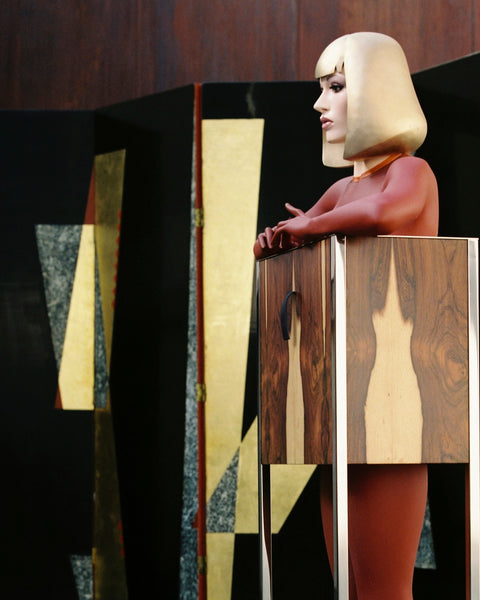
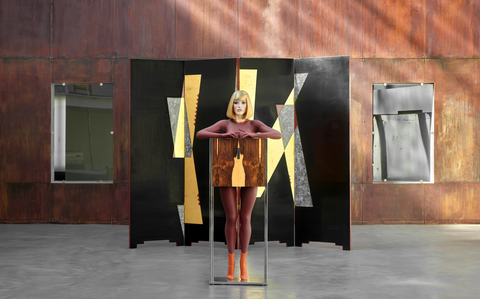
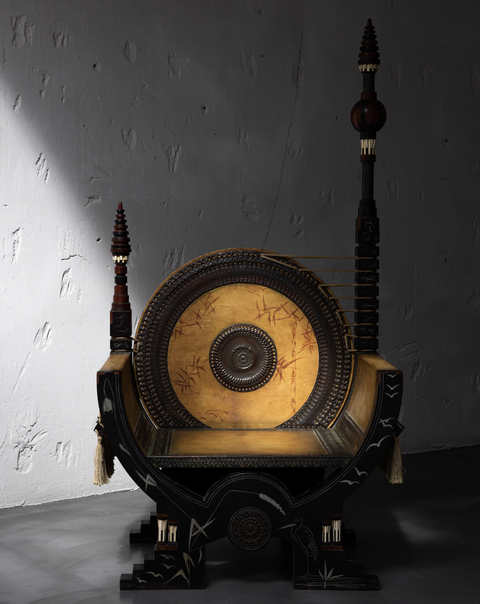
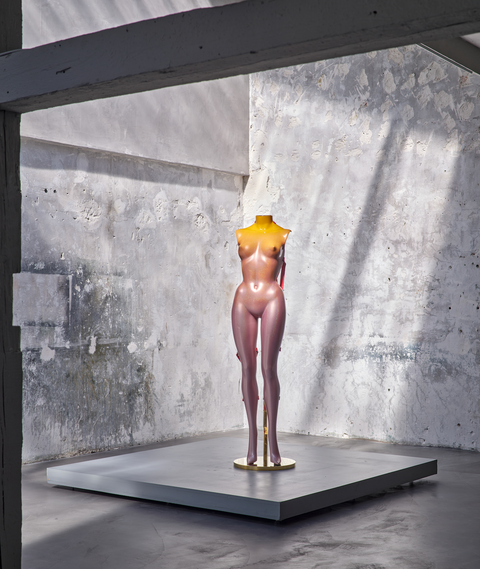
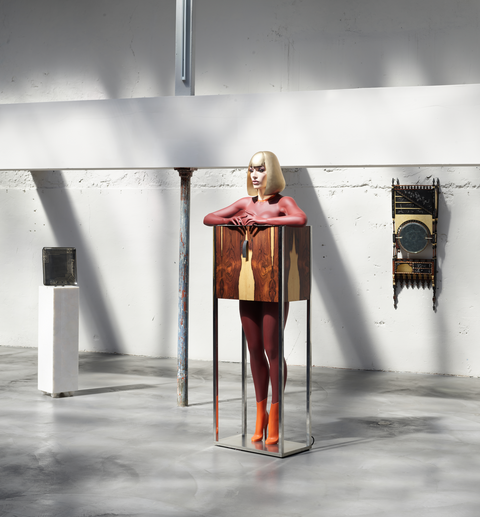
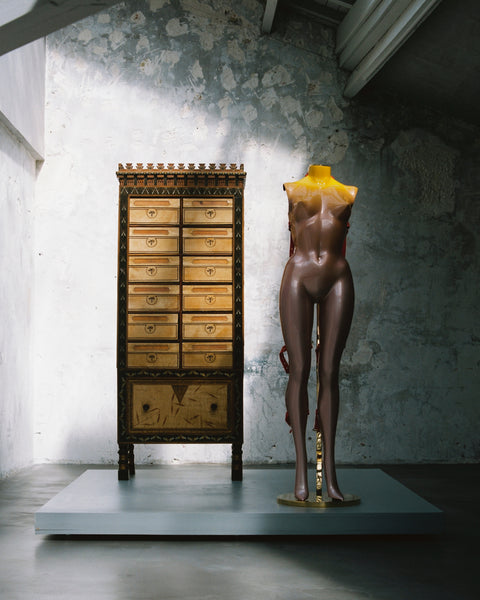
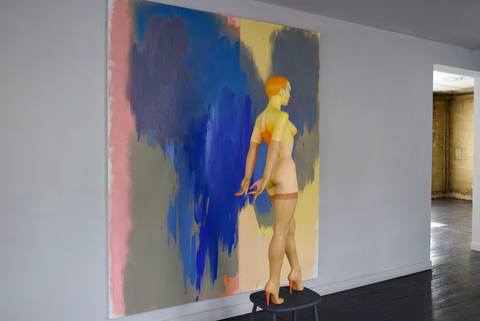
Across the early decades of the 20th century, figures such as Jacques-Émile Ruhlmann, Carlo Bugatti, Jean Dunand, Koloman Moser, and Pierre Legrain approached the object not as a fixed answer, but as a field of possibility. Beneath the rigor of craftsmanship, something quieter unfolds: a gradual loosening of utility, a drift toward autonomy. Furniture becomes less about serving and more about asserting, line, surface, proportion, material, each element gaining a presence that could no longer be reduced to function alone. This transformation was neither abrupt nor declared. It unfolded over time, through refinement, excess, and at times contradiction, until the object stood on its own terms, no longer bound to thedecorative, but fully entering the rea lm of form as an independent language. It is precisely at this threshold that Allen Jones appears. Emerging in the 1960s, within the rise of Pop, his work belongs to a moment of cultural liberation, when art turns toward the vernacular, the commercial, and the body itself. Desire, no longer veiled, enters directly. Jones engages with the fetishistic dimension embedded in this new visual language, where objects and bodies become sites of projection, exposing and amplifying it. Emerging in the 1960s, within the rise of Pop, his work belongs to a moment of cultural liberation, when art turns toward the vernacular, the commercial, and the body itself. Desire, no longer veiled, enters directly. Jones engages with the fetishistic dimension embedded in this new visual language, where objects and bodies become sites of projection, exposing and amplifying it. And so two worlds meet.
On one side, objects that have gradually emancipated themselves from utility; on the other, objects that from their very inception destabilize their own purpose, between them unfolds a shared territory of temptation, where form becomes a space to transform, to transgress, to be inhabited like a self. Within this tension, the object offers itself and withdraws to exist simultaneously as surface and depth, function and fiction, body and artifact. Perhaps this is its ultimate condition: not to serve, nor to represent, but to exist in tension, where form, finally, becomes desire.
Almine Rech, Sceners Gallery