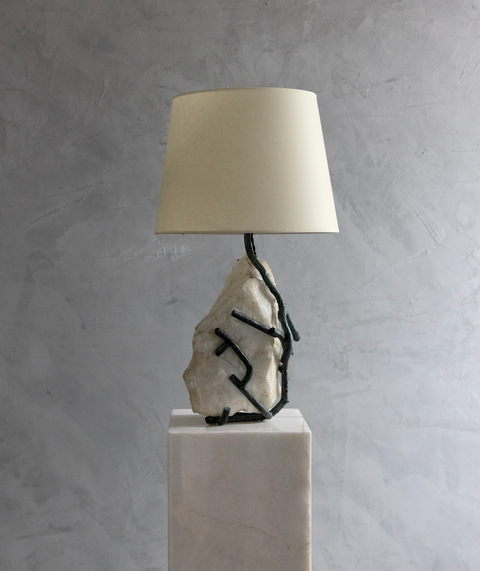
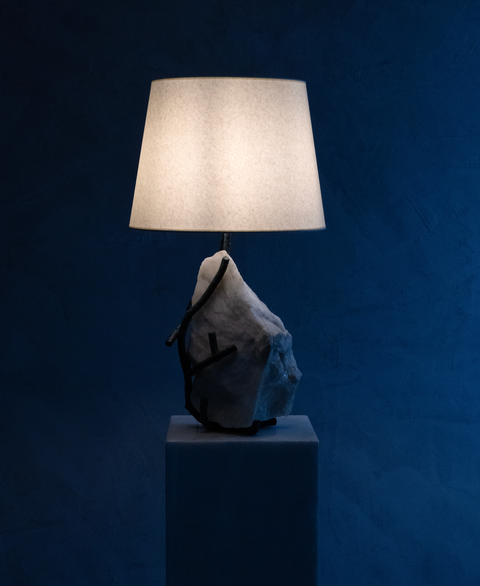
MARC DU PLANTIER - QUARTZ LAMP
Regular price€0,00 Sale priceMarc Du Plantier, Quartz Lamp │ Circa, 1960
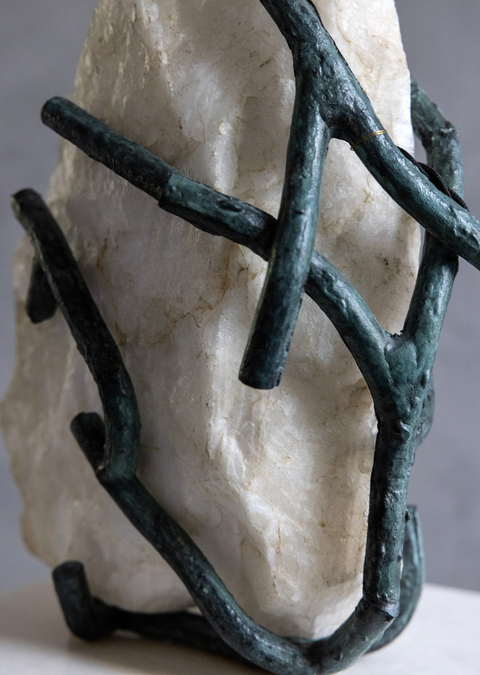
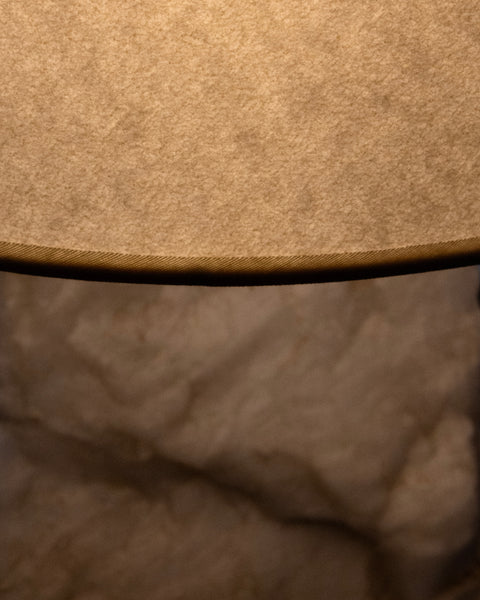
Patinated bronze and quartz
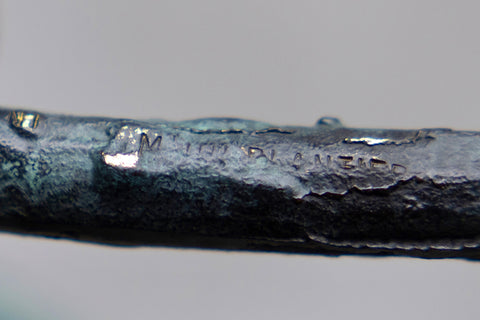
Signed under base 'M. DU PLANTIER'
H 58 x ø 31,5 cm / H 22,8 x ø 12,4 in.
Provenance: Private collection, Europe.
ABOUT MARC DU PLANTIER
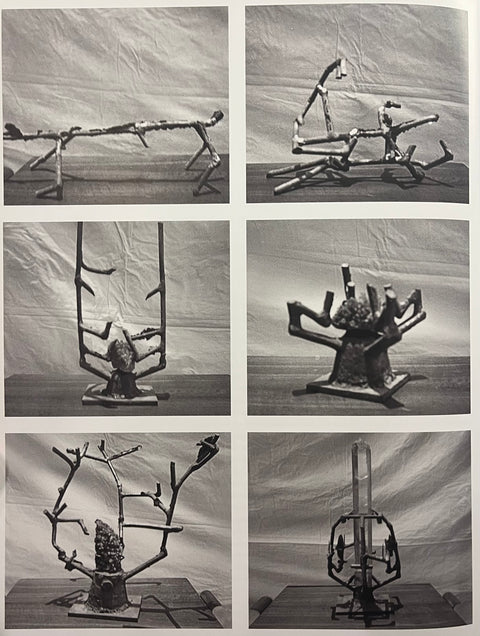
To treat interior space not as a void to be emptied, but as a monumental stage to be orchestrated, was the defining instinct of Marc du Plantier. Moving between Paris, Madrid, and Los Angeles, he crafted a singular vision of modern decorative art that stood radically apart from the ascetic functionalism of his contemporaries. Emerging in the 1930s, his work defied both industrial dogmas and late Art Deco excess, pioneering a visionary Neoclassicism where the proportions of antiquity were re-engineered into a dramatic, contemporary spatial experience. Trained in architecture at the École des Beaux-Arts in Paris, du Plantier opened his showroom on the Rue du Faubourg Saint-Honoré by the early 1930s, attracting elite patrons like the Vicomtesse Marie-Laure de Noailles. Collaborating with artists like Christian Bérard. His career unfolded across three distinct international chapters. Relocating to Spain during World War II, he spent a decade in Madrid designing reception salons for the French Embassy and private residences for Spanish nobility, including the Duke and Duchess of Alba, blending French clarity with dark Iberian iron and timber. Returning to Paris in the 1950s, he transformed his residence on the Rue de l’Élysée into a celebrated showcase of mid-century taste,pairing classical architecture with bold modern forms. In his final era during the 1960s in Los Angeles, du Plantier executed an inventive pivot: captivated by California’s technological optimism, he integrated Space Age acrylics,polished steel, and kinetic lighting into his timeless classicist geometry. Throughout these transformations, du Plantier’s sculptural materiality remained peerless, balancing old-world craftsmanship with modern daring through bronze, brass, wrought iron, alabaster, and vellum. Today, he is remembered as a master of theatrical modernism who redefined the relationship between history and modern living, orchestrating interiors that functioned as enduring palaces of myth.